Key points:
- Job openings were little changed at 7.5 million in September.
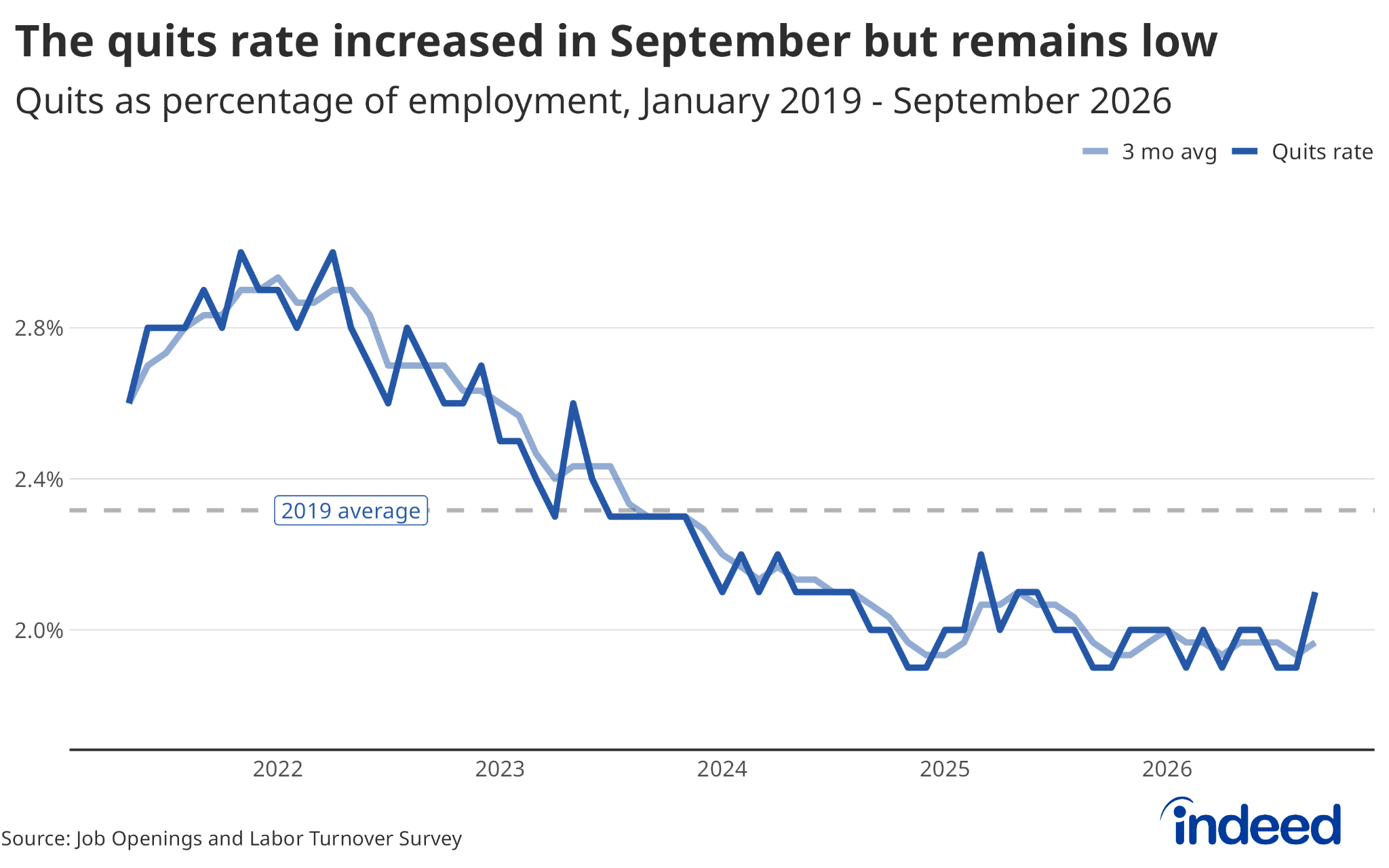
- The quits rate was 2.1% in September, rising above 2% for the first time since June 2025.
- The layoff rate was 1% in September, still within the narrow range it has held since mid-2024.
The US labor market has rarely been this still, even in the face of climbing energy prices, stubborn inflation, and staggering amounts of money being poured into AI infrastructure and data center buildouts. The economy has been making plenty of noise, but the labor market has remained fairly silent. For two and a half years, the share of workers separating from their jobs each month, whether they quit, got laid off, or left for any other reason, has barely moved. A slight bump in the quits rate – to 2.1% in September, the first time it has exceeded 2% since June 2025 – may signal a turnaround, but the signal is faint. Churn hasn’t been this sluggish for this long since the early 2010s, when the economy was still digging out of the Great Recession. Today’s unemployment rate is roughly half as high as it was back then, and it has hardly changed in more than two years.
Stability can have its advantages, but quiet isn’t the same as healthy. Employers are hiring at the slowest pace since 2013, and workers are quitting at the slowest pace since 2015. When so few people move, few jobs open up for anyone trying to get in, with new graduates and unemployed workers hit hardest. Job seekers are clearly losing out, but even workers who have jobs may not be coming out ahead. It’s a good time to have a job, if only because it’s hard to lose one. But with paychecks trailing inflation and little leverage to push for a raise or jump to a better offer, many are stuck, too.
Stillness like this doesn’t last forever, and the forces that could end it are already pulling in opposite directions. Indeed job postings recently recorded a year-over-year gain for the first time in more than four years, a sign that employer demand may be thawing. At the same time, the Federal Reserve raised interest rates in September, making it more expensive for employers to turn those plans into hires. Sooner or later, the silence will break. The only question is which way.