Key points:
- UK payrolled employment and vacancies declined over the summer, according to the Office for National Statistics.
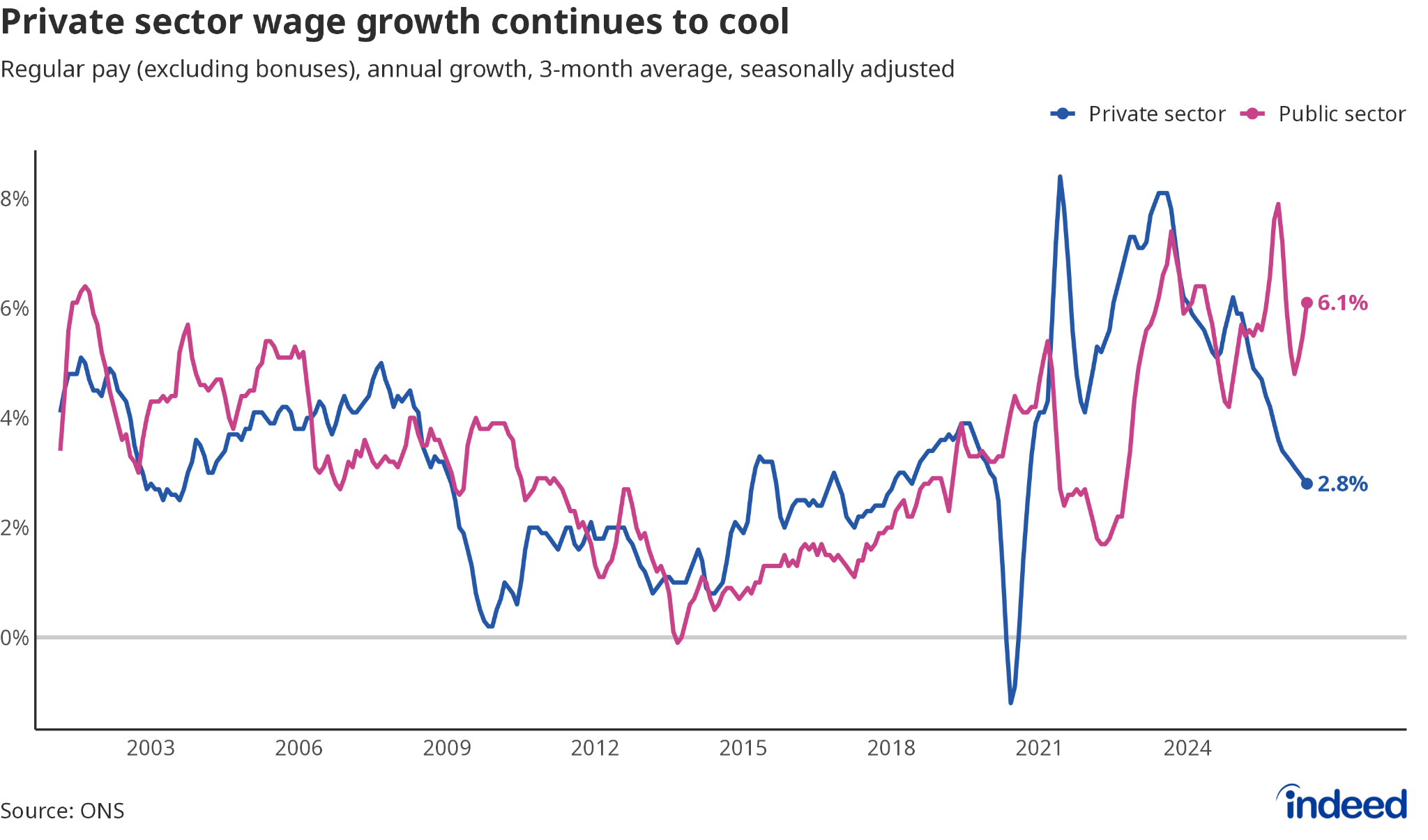
- Private sector wage growth remained subdued.
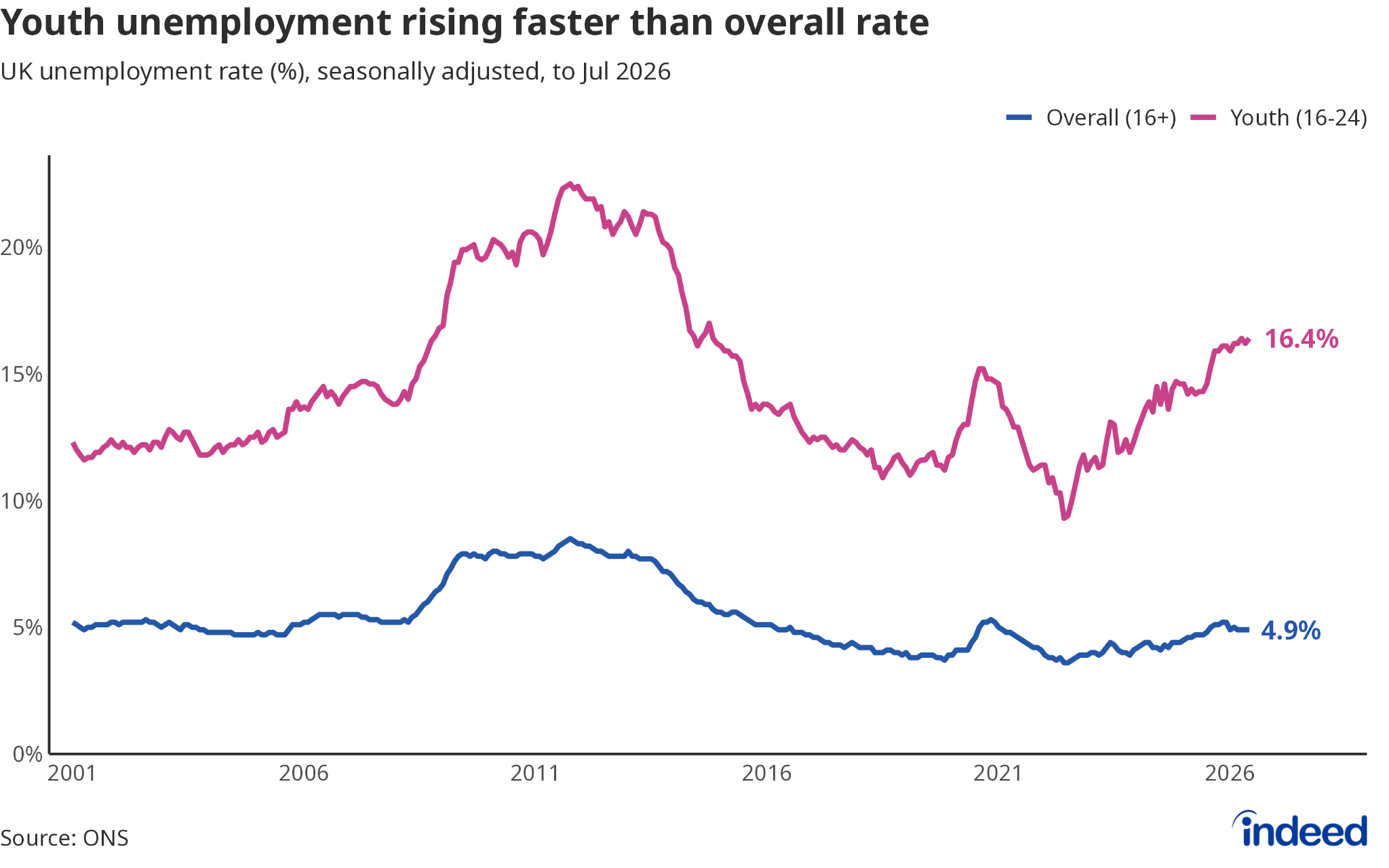
- Youth unemployment rate ticked back up, reaching its highest level in more than a decade.
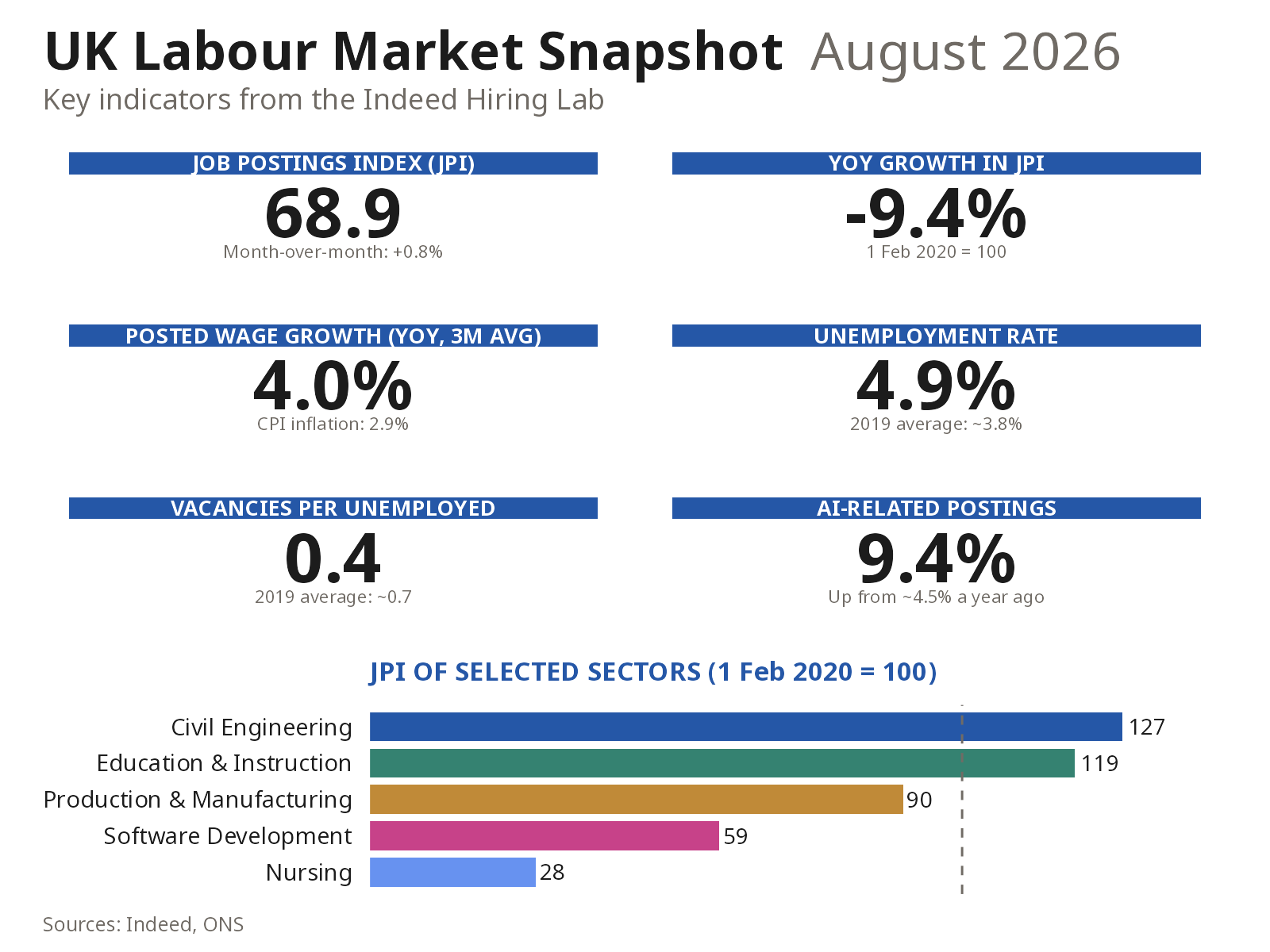
The latest figures show further weakening in the UK labour market over the summer. Vacancies fell and employers cut payrolls by a further 26,000 in August, according to provisional estimates from the Office for National Statistics, following a 39,000 drop in the three months to July. The data underscore the dilemma facing the Bank of England. Inflation concerns continue to mount, especially in light of unexpectedly resilient recent economic growth, but the fragile labour market remains the counterweight to arguments for near-term interest rate rises as inflation concerns mount.
Annual private sector wage growth at 2.9% remains within the Bank’s tolerance zone. Labour market conditions remain much weaker than in the previous energy price spike of 2022 and workers have less bargaining power to demand large raises, suggesting a lower risk of ‘second round’ inflation effects. It’s therefore a live debate as to if, and how many, interest rate rises are needed to constrain inflation pressures.
Youth unemployment remains one of the most concerning features of this labour market, having risen back to 16.4%, its joint-highest in more than a decade, signalling a real pocket of distress among young people trying to enter the workforce. Government schemes including youth jobs grants and guarantees are a step toward addressing this, but with cost pressures and uncertainty continuing to weigh heavily on businesses, a meaningful turnaround looks a long way off.