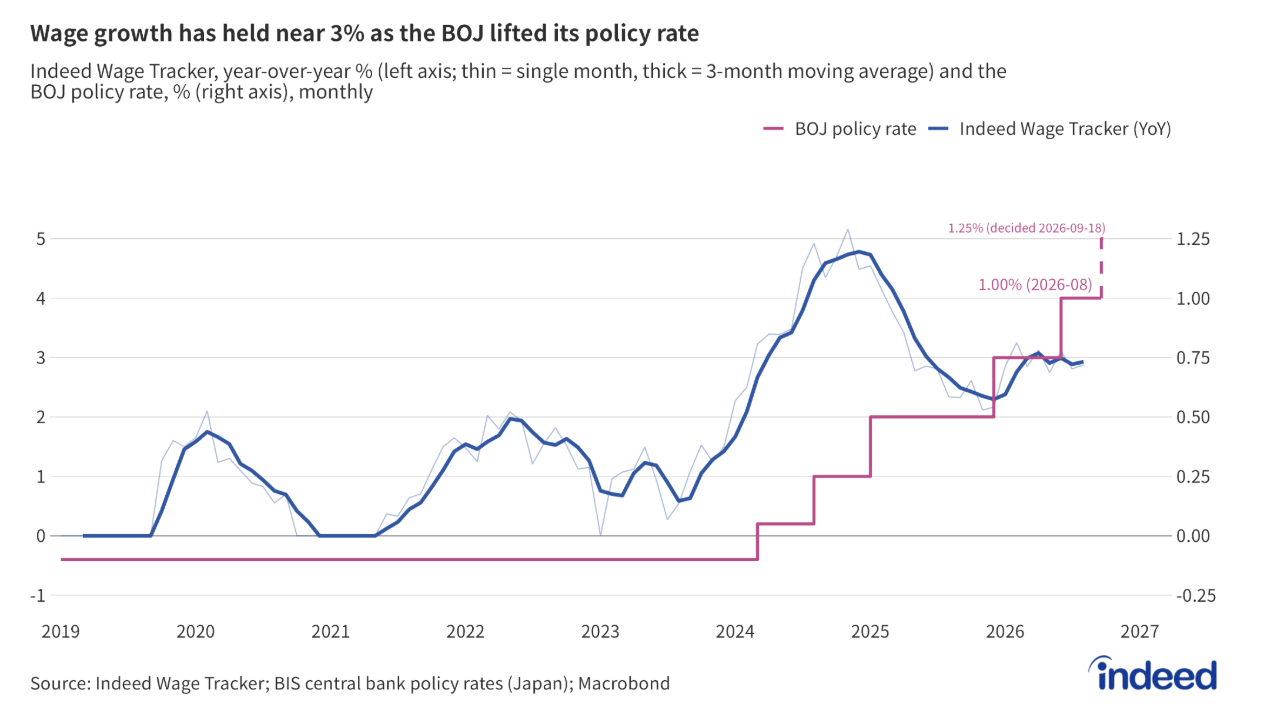
Key points:
- Both posted wages and nominal wages have continued to grow at around 3%, exceeding the approximately 2% rise in consumer prices. Real wages have remained positive.
- In light of developments in foreign exchange rates, prices, the economy, and the labor market, the Bank of Japan raised its policy rate to 1.25% in September. Despite the rate hike, wage growth still appears to be resilient.
See our full Japan Labor Market Chartbook for a more comprehensive view of the Japanese labor market.
Since 2026, both nominal wage growth and the growth in posted wages have been around 3%, and this trend of exceeding consumer price inflation has continued. At the same time, recent price growth has shown signs of accelerating, driven in part by rising prices for fresh food.
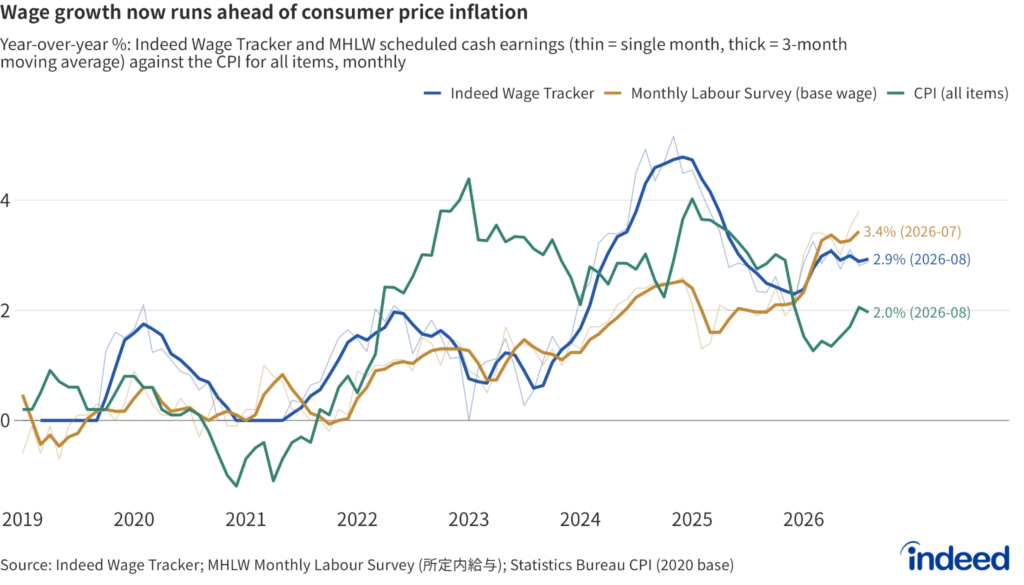
In light of various risks—including developments in the Middle East, expanding demand related to artificial intelligence, and fluctuations in foreign exchange rates—and the possibility that the underlying inflation rate of 2.0% may rise further, the Bank of Japan decided on September 18, 2026, to raise its policy rate from 1.0% to 1.25%.
Wage growth could slow as interest rates rise, but for now it appears broadly resilient overall. Developments going forward will be closely watched.