Key points:
- Employers added 29,000 jobs in September, and the unemployment rate increased slightly from 4.1% to 4.2%, according to the US Bureau of Labor Statistics.
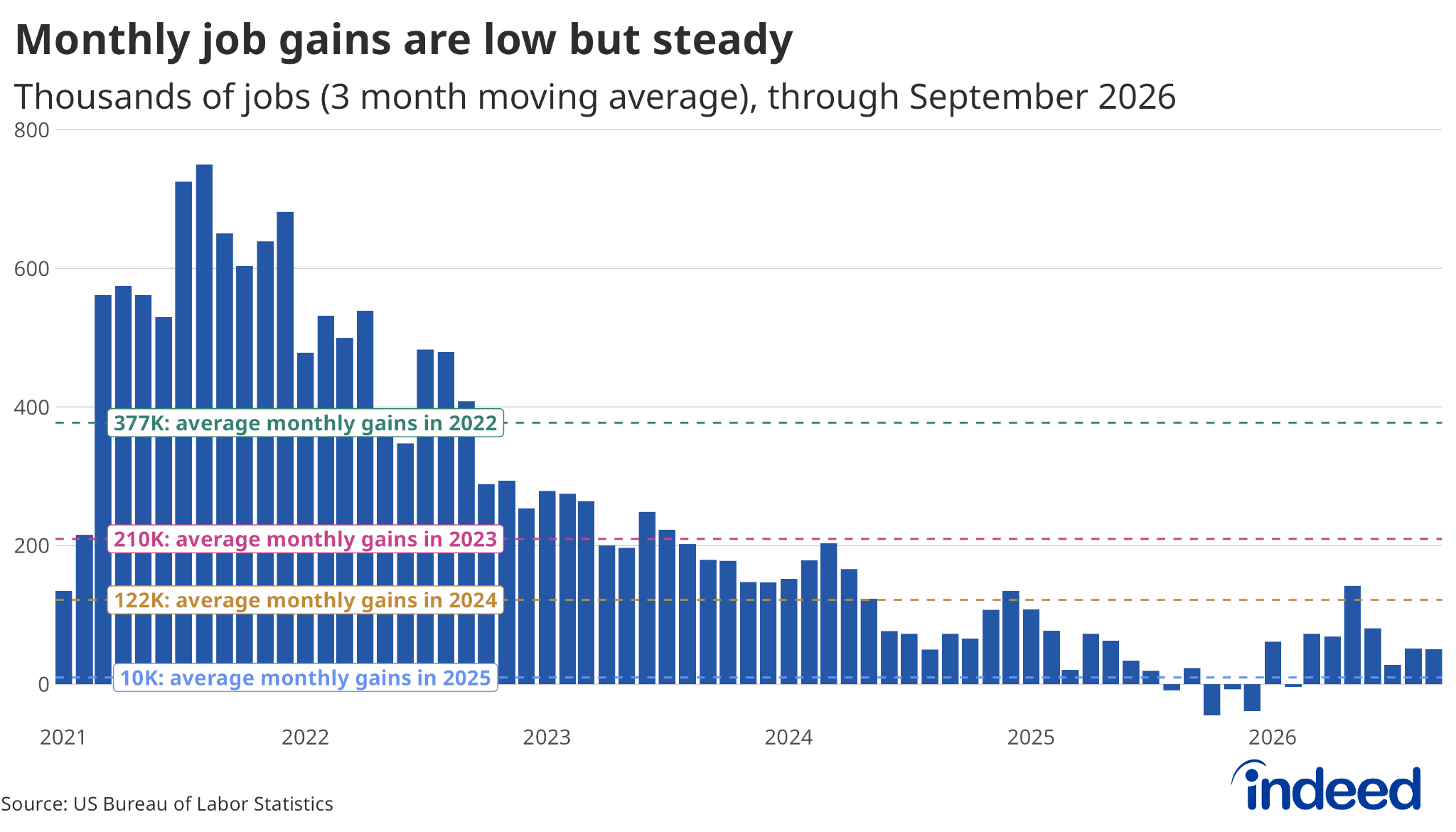
- Revisions to July and August subtracted a combined 60,000 jobs, bringing the three-month average job growth to 51,000 per month, exactly equal to last month’s report, after accounting for revisions.
- The labor force participation rate ticked up slightly in September to 61.8%.
The US labor market delivered more of the same in September: Steadiness without a spark. Employers added 29,000 jobs, and the unemployment rate ticked up to 4.2%. Today’s report falls especially flat when read through the lens of stubborn inflation, which continues to run well above the Federal Reserve’s 2% target. Policymakers raised key interest rates last month for the first time in more than three years, and a report like this may make some committee members hesitant to raise rates again in October. The labor market is still aloft, but it’s unclear how long it can keep circling while it waits for inflation to clear the runway.
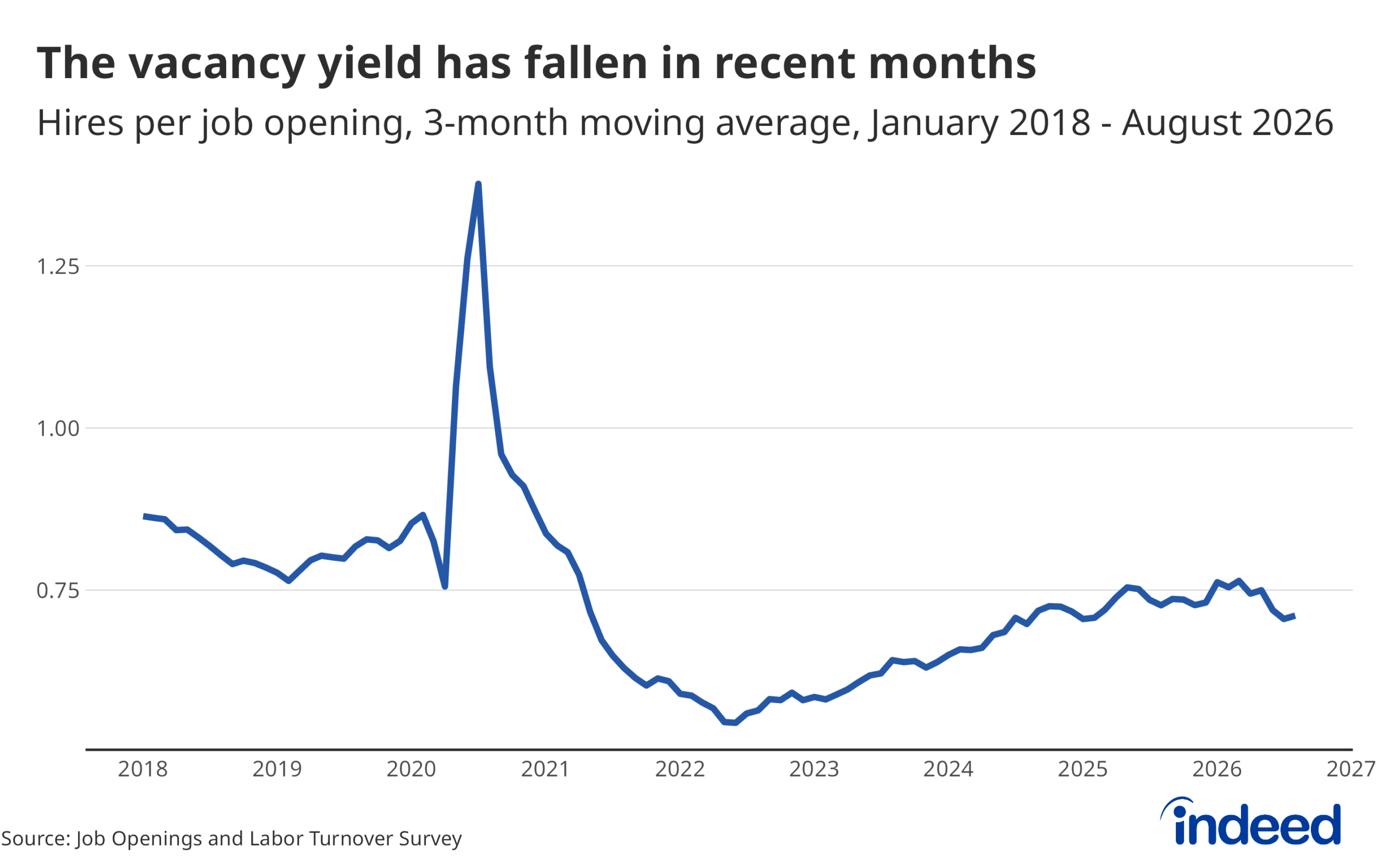
Zoom out, and September fits a pattern two years in the making. A couple of years ago, a soft economic landing – bringing down inflation without a wave of layoffs – felt very much in play. And a check of the flight logs shows that while the labor market has quietly worked through nearly every item on its pre-landing checklist, the economy still hasn’t landed. Job postings on Indeed fell back to their 2020 baseline earlier this year, but have since crept back above it, recently logging their first year-over-year gain since late 2022. Hiring, quitting, and layoffs have moved sideways, settling into a rhythm in which employers are holding on to the workers they have and holding off on hiring the ones they don’t. For people with jobs, that has meant stability. For people looking for work, the doors haven’t slammed shut, but few are swinging open. In spite of economic uncertainty, slower hiring, and a drumbeat of fears that AI would wipe out jobs, the labor market has held up better than many expected.
Last month’s rate hike is a judgment that the labor market has enough fuel in the tank to stay in the air while policymakers finish the job on inflation. But higher borrowing costs could become a headwind for companies’ hiring, while stubborn prices may squeeze the customers who keep those businesses busy. An aging population and a diminishing labor supply are also weighing on the labor market, reducing the economy’s natural momentum and leaving less room to absorb turbulence. None of this means a hard landing is coming, but it does mean the margin for error is narrowing. If policymakers can get the timing right and bring inflation down soon, the labor market may have just enough left to land. But a holding pattern is only safe while the fuel lasts, and every lap burns a little more.