Key points:
- Job openings edged down to 7.1 million in August, from a revised 7.3 million in July, according to the US Bureau of Labor Statistics.
- The layoff rate edged down by 0.1 percentage point to 1.0% in August.
- The quits rate remained unchanged at 1.9% in August.
Another JOLTS report headlined by “little change” does not inspire much confidence that the dynamism needed to meaningfully improve the overall employment picture will materialize any time soon.
Employers keep signaling that they want more workers, but they just aren’t hiring them. Job openings have trended up since late 2025, but hiring continues to move sideways at low levels. Muted hiring would normally be a warning sign, but workers aren’t being pushed out the door either. That combination of low hiring and even lower layoffs and quits keeps payrolls growing but makes the labor market far less dynamic than it was a few years ago. It’s a comfortable place to be if you already have a job. It’s a frustrating one if you’re trying to find one, especially for new graduates and others entering the workforce.
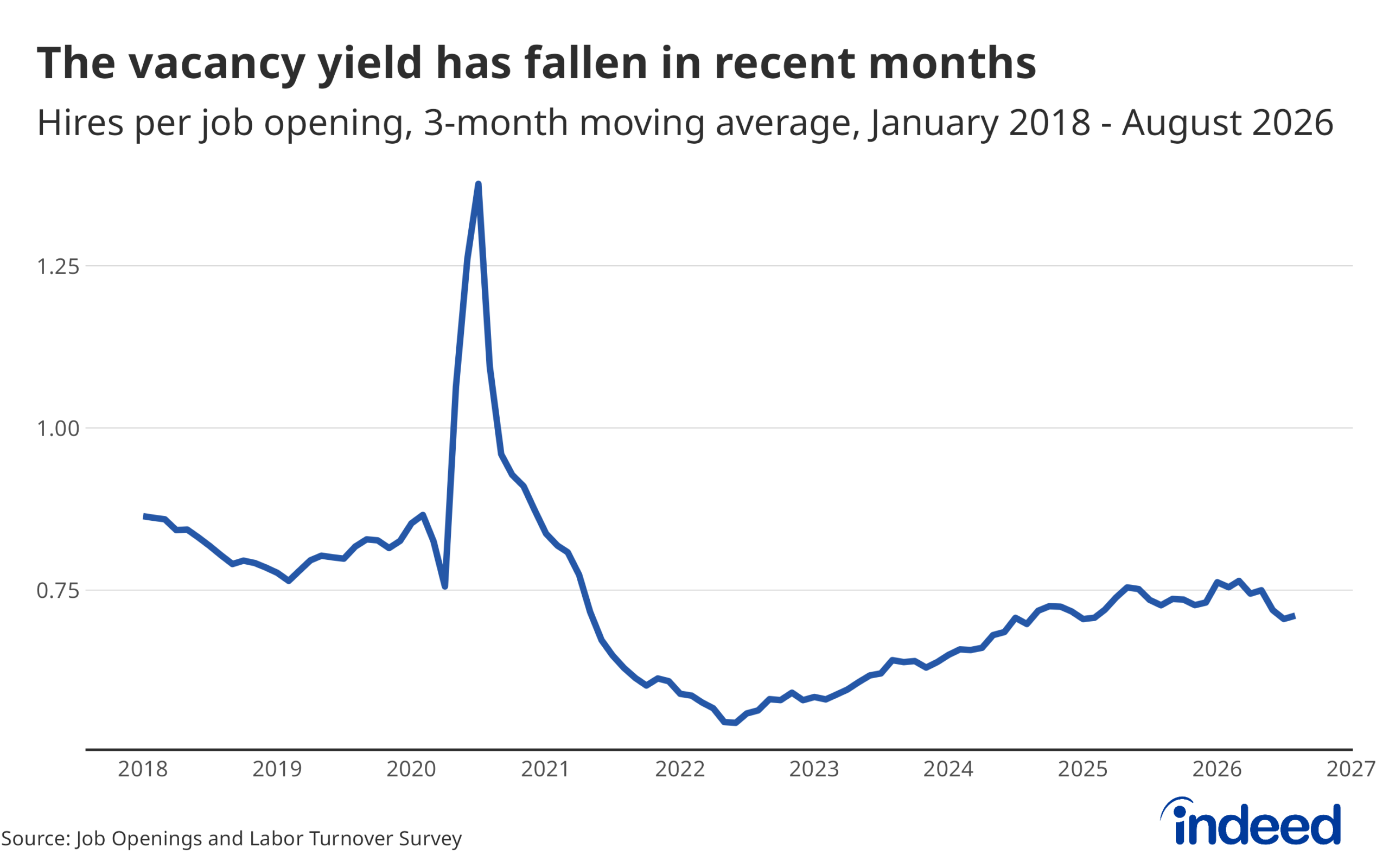
The gap between employers’ job-opening signals and their actual hiring is showing up in the job-filling rate, or vacancy yield. Because filling a role takes some time, the vacancy yield compares hires in a given month to openings at the end of the previous month. In August, there were about 0.7 hires for every opening in July. That’s a clear improvement from a 2022 low of 0.5, when employers were posting far more jobs than they could fill. But it’s still short of the roughly 0.8 hires per opening in August 2019.
While more demand for workers is likely to eventually translate into more hires, we aren’t there yet. The year-over-year percent change in Indeed job postings turned positive in mid-September for the first time in more than four years. That momentum, along with low layoffs and low unemployment, gave the Federal Reserve cover to raise interest rates earlier this month, its first hike in more than three years. But it also raises the stakes. Higher borrowing costs impact employers’ existing and future hiring plans, and they’re arriving at a fraught moment. Hiring managers are weighing both the costs of the roles they already have open and the potential costs of opening more roles in the future. At its core, a job posting signals an intention to hire, and a rebound built on intentions alone can quickly stall. Most people look at the jobs report as the single best indicator of labor market health, but we have moved into a world where every piece of labor market information is vital. The number of jobs added in a given month, whether up or down, is ultimately a function of employers’ hiring appetite and workers’ willingness to take a risk on a new opportunity. Indeed data shows hiring intentions rising slightly, but it’s unclear if those intentions will turn to action. As long as hires and quits stay low, what ultimately happens to total jobs added/lost won’t matter as much to the overall labor market.