Key Points:
- The FOMC voted today to increase its target federal funds rate by 25 basis points, to a range of 3.75% to 4%, the first rate hike in three years.
- The move represents an effort to keep inflation expectations in check as soaring energy prices pass through to the wider economy.
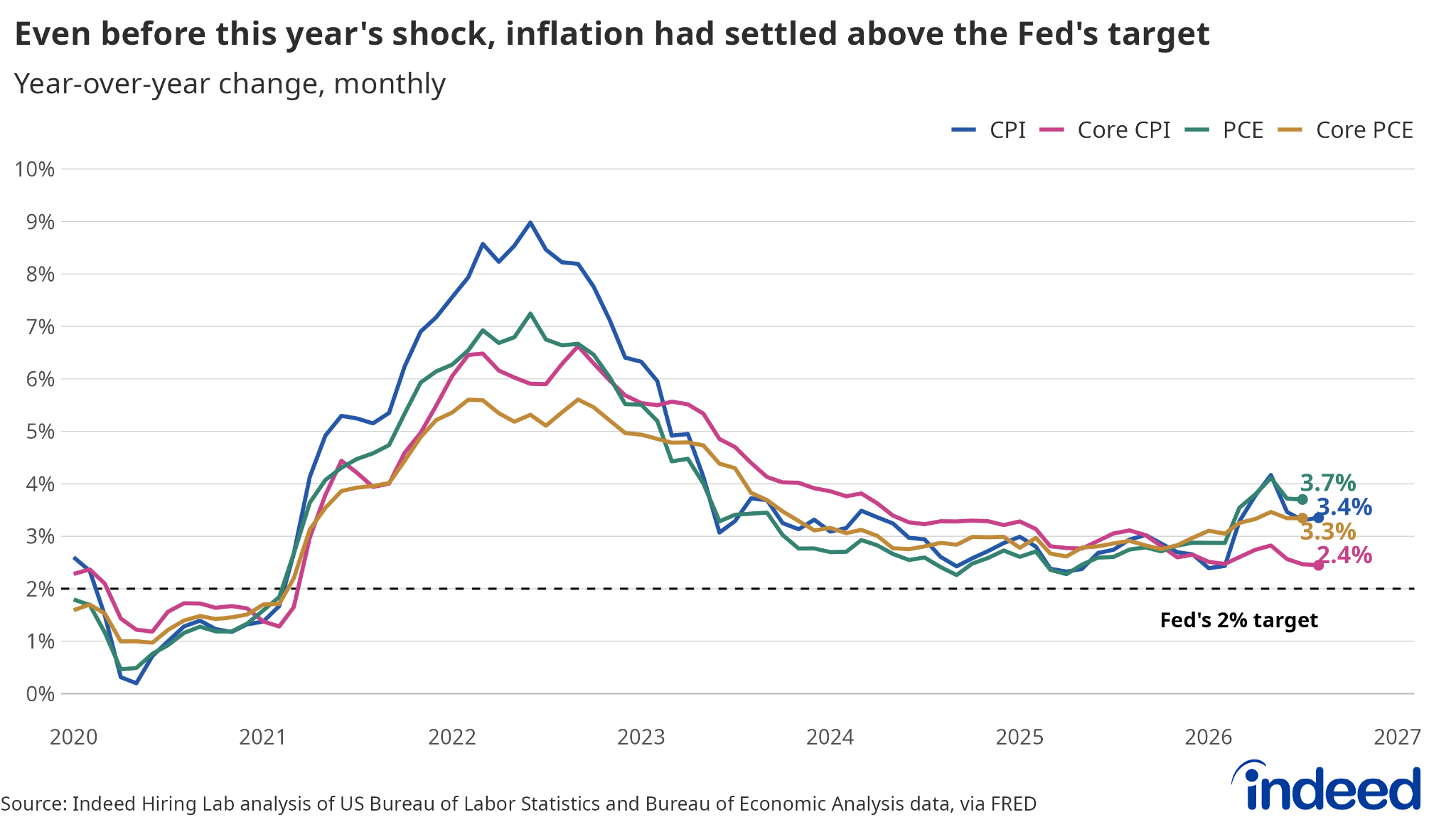
The Federal Reserve’s Federal Open Market Committee (FOMC) voted today to increase its target federal funds rate by 25 basis points, after a surprisingly strong August jobs report left committee members more confident that the labor market could withstand a revitalized effort to slow down rapid price growth. While the move was widely expected, it represents a paradigm shift in the thinking of Fed officials, who, so far this year, have aimed to support the labor market by leaving interest rates unchanged, even as annual inflation consistently ran above their 2% goal. Now, as soaring energy prices add to a years-long stretch of continuing price shocks, there is growing concern that expectations for higher long-term inflation will be embedded in the economy and become self-fulfilling. The Fed has limited ability to directly affect energy prices, but today’s move still represents an effort to keep expectations for future price growth in check.
In announcing its decision, the committee noted that “economic activity is expanding at a solid pace” and that domestic spending remains strong despite ongoing geopolitical uncertainty. Even so, the Fed is walking a fine line. Credibly signaling that they have inflation under control may require multiple rate hikes, and 16 out of 18 FOMC members projected at least one additional hike this year. This path would dampen economic activity, but won’t refill oil reserves. If persistent supply shocks keep price pressures high, the Fed may soon be forced to decide just how much economic damage it is willing to accept over the short and medium term to keep long-term inflation expectations anchored.