
Key Points:
- Gen Z is moving into management. Gen Z makes up 24% of the labor force and 12% of managers, and are projected to outnumber Baby Boomers in management in 2027.
- They’re optimistic, but restless. Gen Z is the only generation expecting the job market to improve next year, and they rate their employers more highly. Yet nearly a third of employed Gen Z workers are actively job hunting.
- They want different things from work. 58% want a mentor, but only 25% have one. Gen Z values flexibility and culture-related benefits more than older generations, and many prefer onsite or hybrid work. Employers that adapt now will be better positioned to keep their future leaders.
Gen Z is growing up fast, with the oldest members turning 30 in 2027. But far from just entering the workforce, this generation is now firmly established in the labor market and will define the way we work for decades to come. Gen Z workers now make up nearly a quarter of the labor force (24%), a much larger share than Baby Boomers (11%). We estimate that the number of Gen Z individuals in the labor force will surpass Gen X in 2028, becoming the second largest working generation behind Millennials.
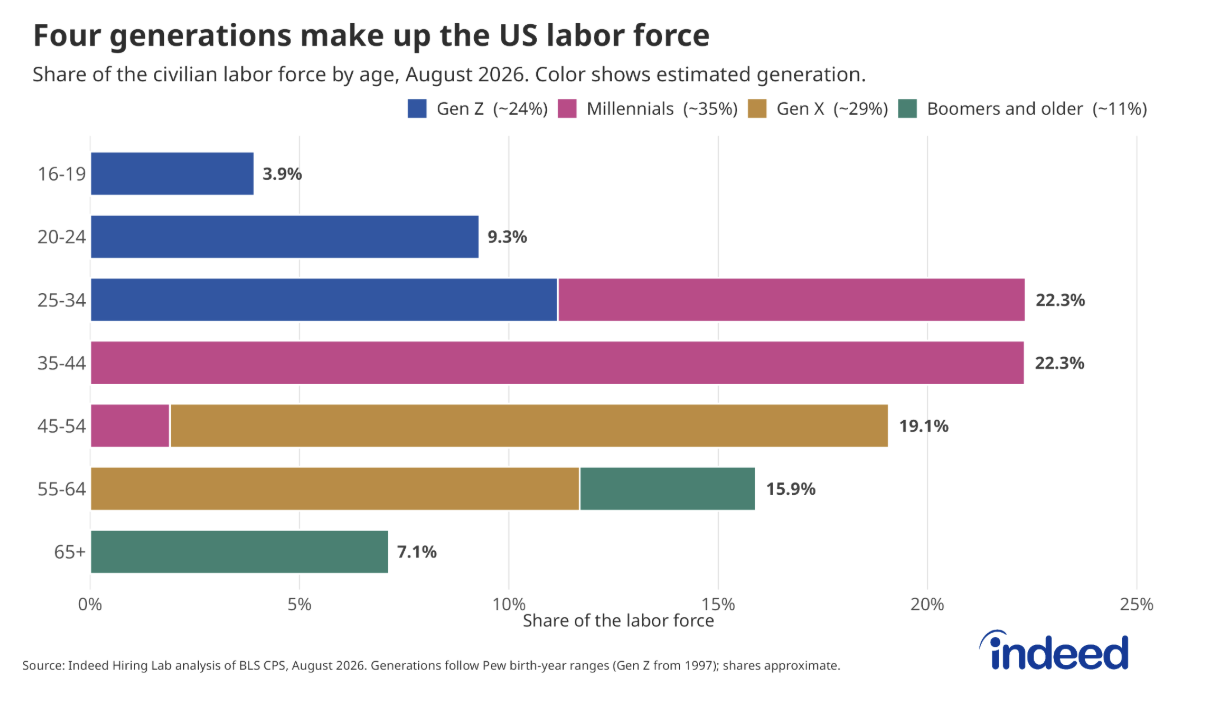
Younger and entry-level workers have faced challenges in the recent labor market. Even in this unfavorable environment, Gen Z has poured into the labor force. Their 24% share is almost exactly the share Millennials held in 2010, when the oldest members of that generation were also 29.
Not only have Gen Z workers moved fully into working age, they are also transitioning into management roles. Gen Z are 12% of managers in 2026, and Gen Z and Millennials combined make up a narrow majority of managers (50.6%). If historical trends continue, we estimate that Gen Z will outnumber Baby Boomers in management in 2027, and will surpass Gen X in 2033 – likely much sooner than many employers expect.
The through line is simple: Gen Z is here to stay, and the workplace will increasingly adapt to their preferences and leadership styles. Here are four trends that business leaders need to understand about how Gen Z works and leads, leaning on Glassdoor sentiment data and findings from the 2026 Indeed Hiring Lab Workforce Insights Survey (WIS).
Gen Z is positive (even in a pessimistic time)
Many Gen Z workers entered the labor market during COVID and its aftermath, and have spent their early careers in a hiring market that has swung from frenzied to frozen. They have experienced both decades-high inflation and decades-low economic and consumer sentiment. You might, therefore, expect a generation of weary young adults. The data tell a different story.
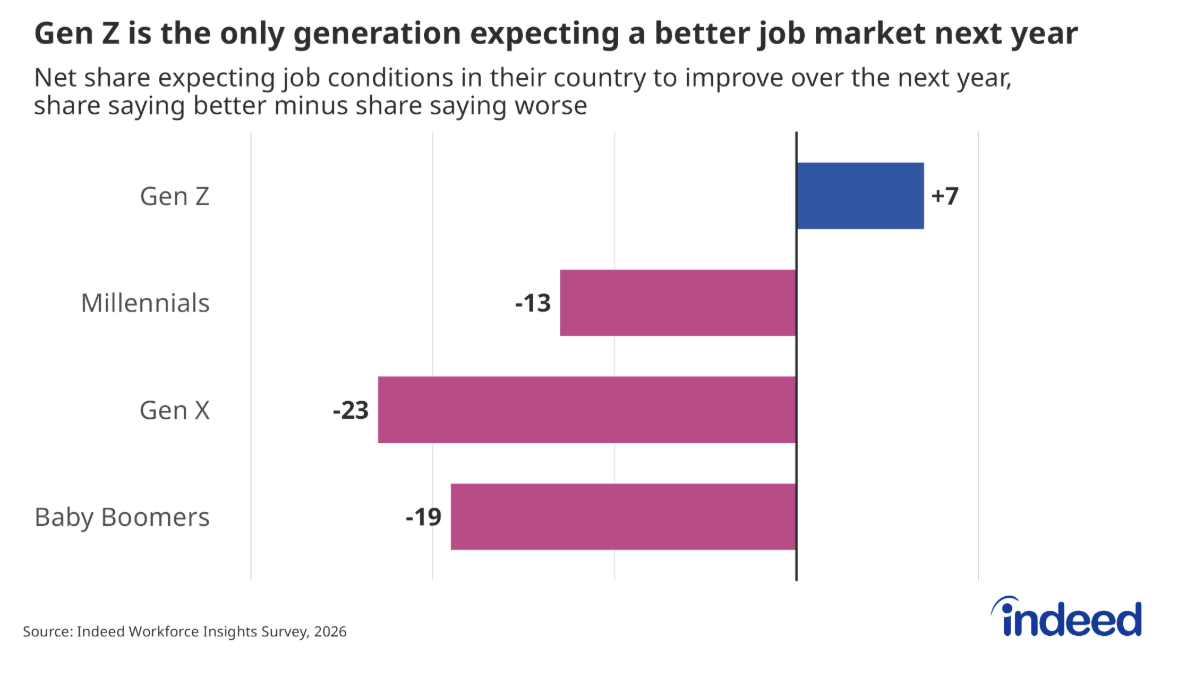
Gen Z adults who are no longer full-time students are more optimistic than other generations about both the short- and long-term outlook for the economy and their job prospects. In the short-run, they are the only generation that said they expect the overall US job market to improve over the next year. Gen X is the most pessimistic about next year’s labor market.
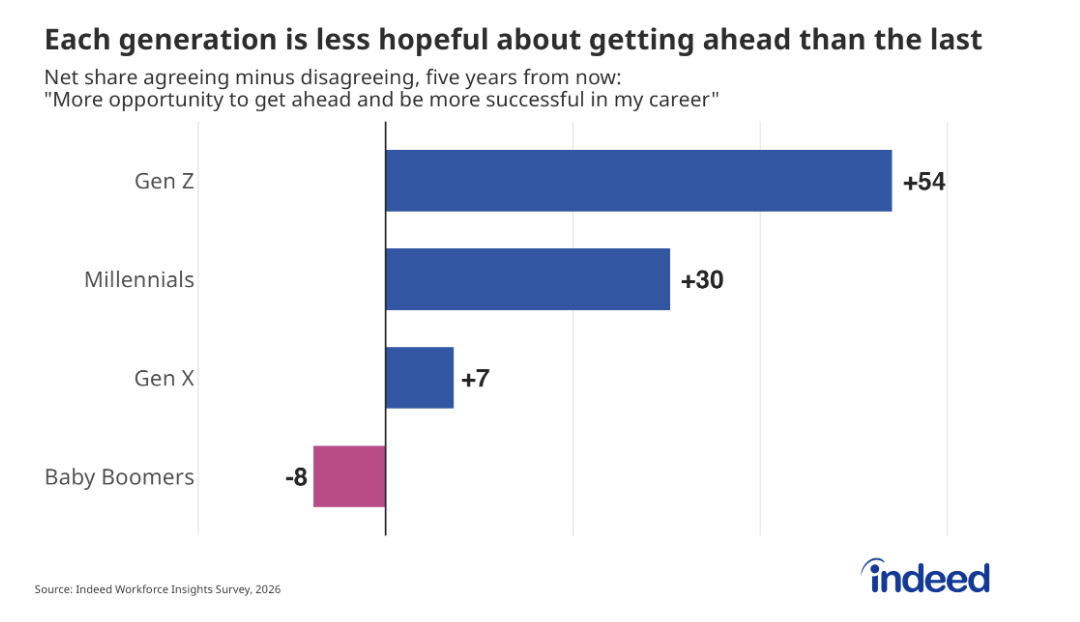
They are also more positive when it comes to longer-term economic conditions. Compared to the other generations in the labor force, Gen Z respondents were statistically more likely to agree that they will have more opportunity to get ahead and be more successful in their careers over the next five years. Longer-term career sentiment deteriorates with age, with each successive generation significantly less likely to report a positive five-year career outlook.
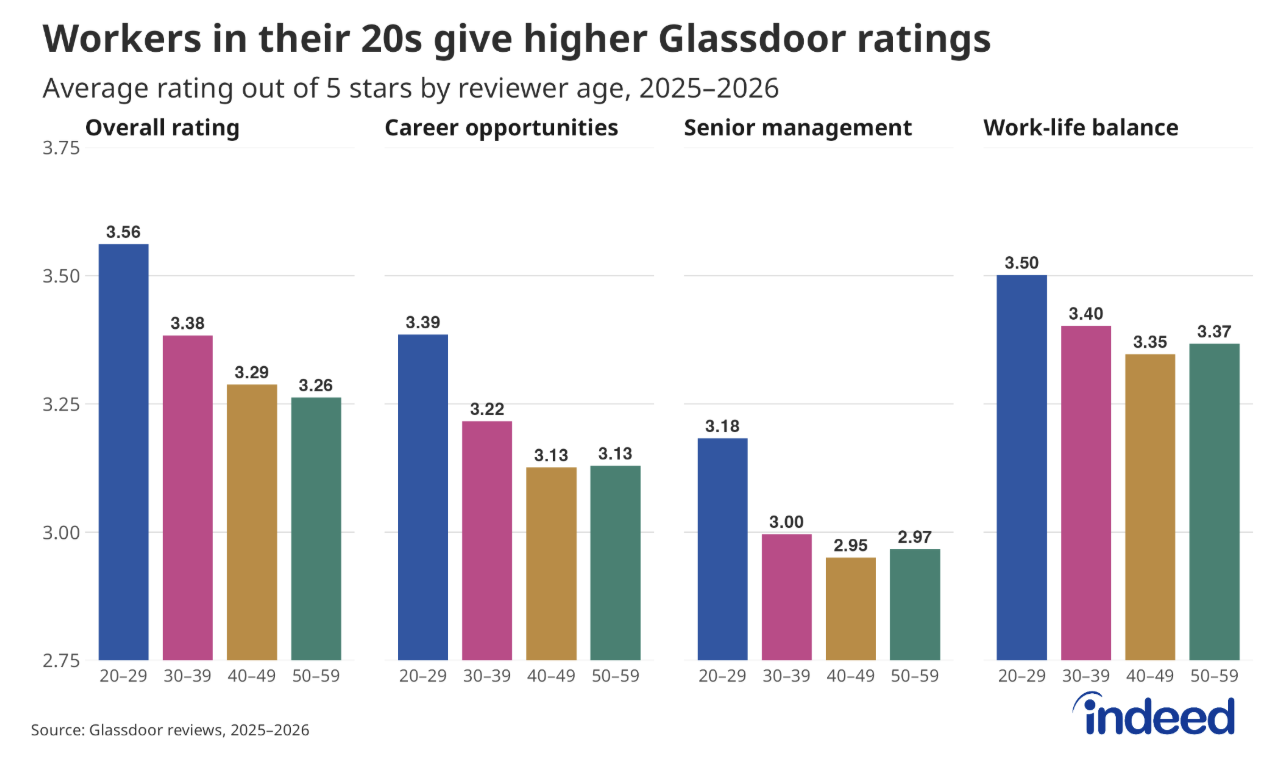
Gen Z’s optimism also shows up in Glassdoor reviews. Workers aged 20-29 rate their employers an average of 0.23 stars higher (on a 5-star scale) than workers aged 30-59, and they score career opportunities, senior management, and work-life balance significantly higher as well. Gen Z are also more positive than Millennials were in their 20s. In 2016, twenty-somethings gave overall ratings 0.14 stars higher than older workers, smaller than the 0.23 star difference today. When it comes to evaluating their own futures or their satisfaction with their companies, Gen Z workers are not all doom and gloom.
They want flexibility and a mentor (not a home office and isolation)
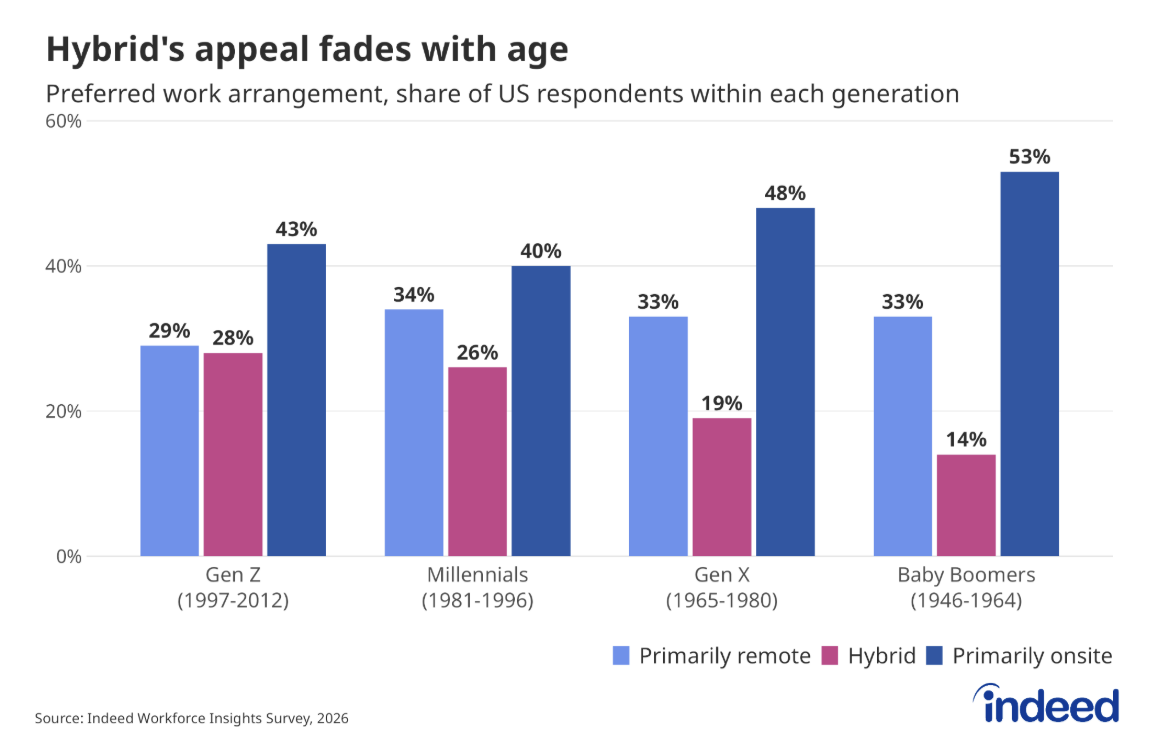
Employers we’ve encountered often assume younger workers want to work remotely. But our data show that isn’t the case, at least not when compared to many of their older colleagues. In fact, Gen Z individuals prefer to work primarily onsite more than other options and are least likely to prefer working in the office one day or less a week. They are also more likely than Gen X and Boomers to want to work via a hybrid arrangement. Baby Boomers are the only generation where a majority of respondents said they prefer working onsite 4 or more days a week (53%).
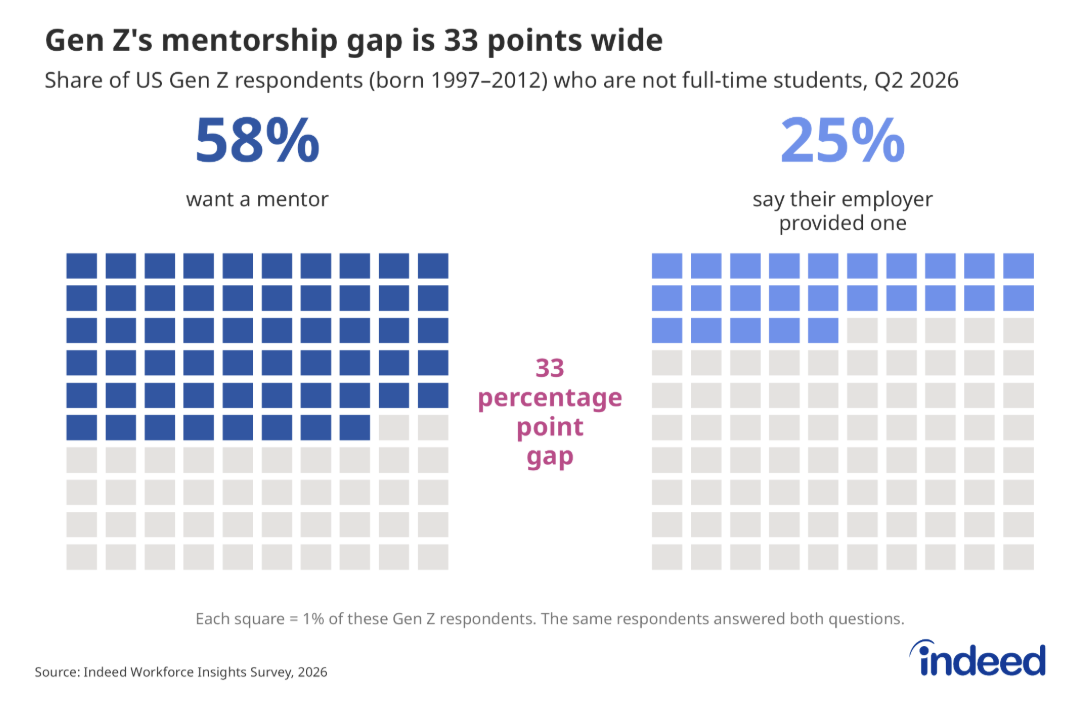
Gen Z also values something that many employers aren’t providing: a mentor. Gen Z respondents who are no longer students report strong interest in upskilling and mentorship. A majority (58%) of them indicate that they want a mentor at work, but only 25% report that their employer provides them one. This gap is notable, and provides employers with an opportunity to do more to meet these mentorship needs. Compared to many other company-sponsored professional development opportunities and employee benefits, mentorship is a low-cost way of meeting Gen Z workers where they are.
They want different benefits
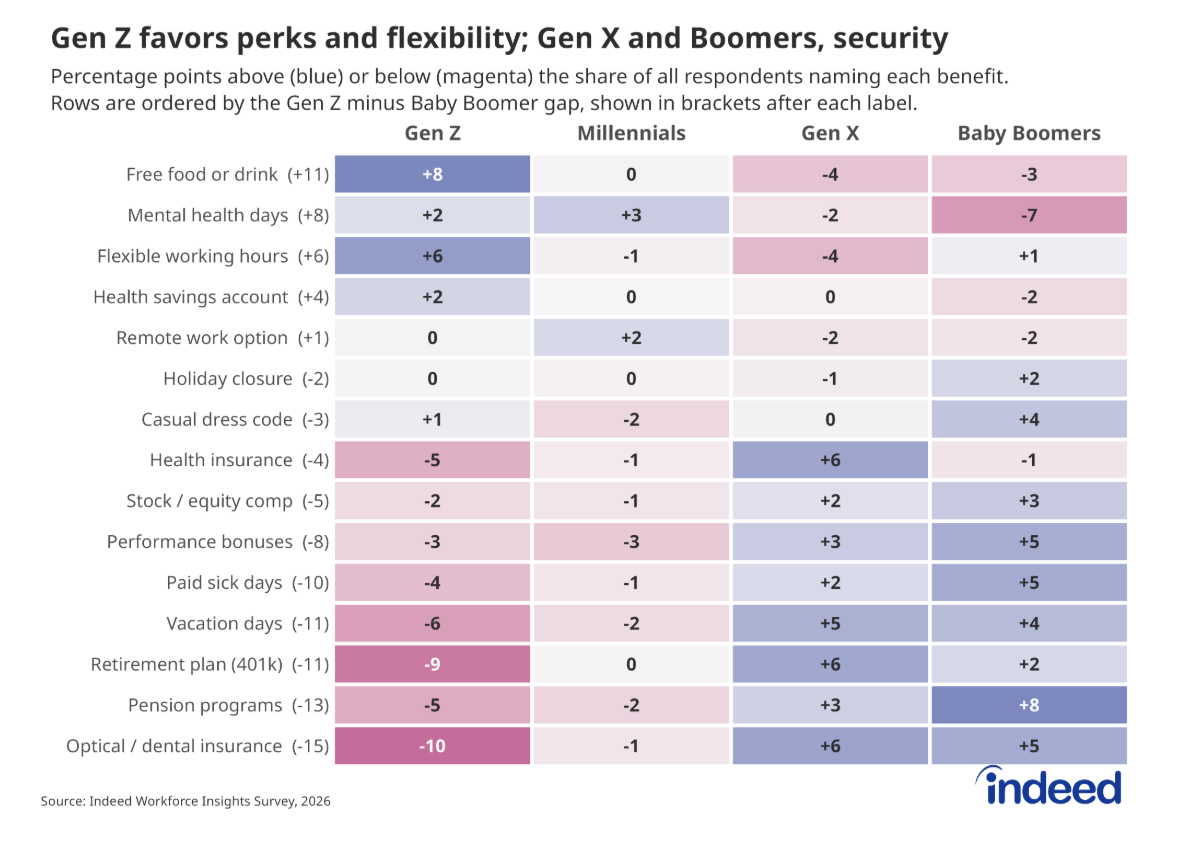
Gen Z also wants different benefits from other generations. Benefits including free food and flexible work hours are especially valued by Gen Z workers, more so than by any older generation.
Our survey asked respondents to rank their top five desired employer benefits. All generations rank health insurance and paid time off highly, but there are notable generational differences beyond those. Gen Z is much more likely to value benefits tied to company culture and flexibility, and within the group these rank above retirement or long-term savings and childcare or family support. About 1-in-5 (21%) of Gen Z respondents chose free food as one of their top 5 employer benefits, significantly higher than any other generation and well above the 13% overall rate at which this benefit was selected. They similarly place higher value on flexible working hours and health savings accounts, known for their flexibility and potentially lower costs. Compared to their elders, they place significantly lower value on benefits such as pension programs, 401(k)s, and dental/optical benefits.
What’s driving these differences? Some of the answer exists in other observable economic data. Gen Z is marrying later, having fewer children, is more likely to live at home, and the younger part of the cohort can remain on their parent’s health insurance until age 26. They are also more likely than prior generations to report that they don’t expect to buy a home or retire traditionally. As a result, traditional employee benefits including health insurance, retirement assistance, and/or parental leave may be less important to Gen Z than the workers who have come before them. While preferences will likely shift as Gen Z ages, some differences will likely persist.
Employed Gen Z workers are more likely to be looking for new opportunities
Gen Z workers, especially those with white collar jobs, might look settled right now. The low-hire, low-fire environment has hit them hard, and few may be eager to change jobs right now. However, things seem to be stirring for these workers under the surface. According to our survey, Gen Z workers who are no longer students are statistically more likely than any other generation to be searching for a job, especially actively, even as Glassdoor data show they are more satisfied than their older colleagues.
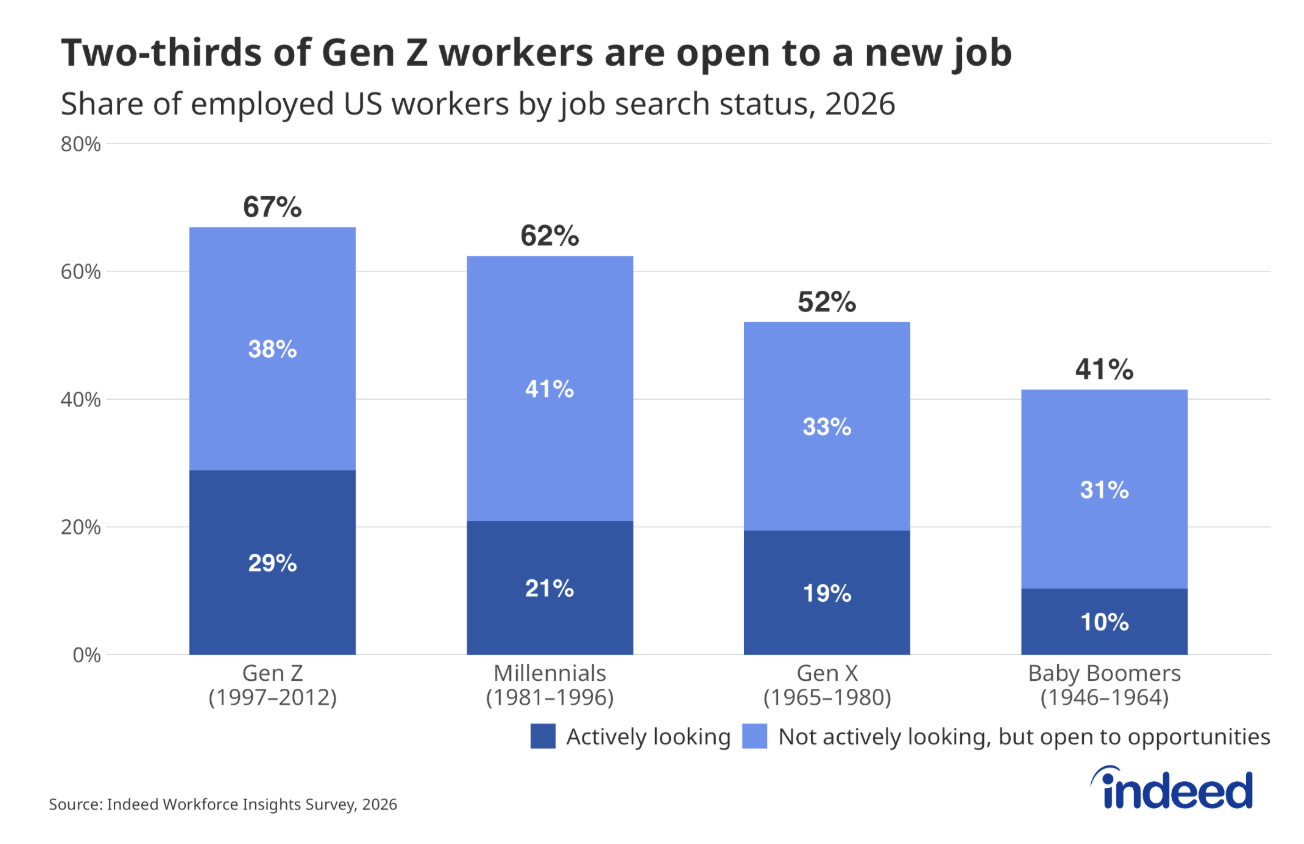
This may seem like a contradiction, but it’s not. Gen Z appears to be a generation that is content enough to stay where they are for now, but also curious about what exists beyond their current role. If and when the labor market tightens, employers who haven’t invested in this generation of workers may find this out the hard way. The good news is that this generation is young enough that investments made now that are designed to appeal to these workers can make a real difference for them as they progress into the next stages of their career.
Takeaways for employers and job seekers
It may be tempting to assume that Gen Z will eventually settle into the habits and preferences of the generations before it. But expecting that won’t make it so. Given that they now make up 24% of the labor force, employers will benefit by learning and adapting to their preferences sooner rather than later. They represent the next business leaders and entrepreneurs, and investments in them today will go a long way tomorrow.
For employers, the implications are practical: review your current slate of employee benefits through the lens of what this group values. Investing in mentorship, flexibility, career development, and other desired benefits may help you recruit a high level of young talent that will very soon become the backbone of your management team and succession plan.
For job seekers of any age, Gen Z’s outlook carries a lesson. Optimism about your career opportunities can be a competitive advantage in a market where many workers and job seekers are discouraged. Look for employers who prioritize development, mentorship, or education support, and don’t be shy about asking about it before you accept the position.
A downloadable version of our full 2027 US Hiring and Worklife trends report can be found here. Detailed methodology statements for this and each of the six chapters in this year’s report can be found here.