
Key points:
- Nonfarm labor productivity, or output per hour worked, increased at a robust 3.6% annualized rate in the third quarter, putting year-over-year productivity growth at 2.1%, according to the Bureau of Labor Statistics.
- Unit labor costs (i.e., the productivity-adjusted cost of labor), fell at a 0.7% annualized rate over the quarter but are still up 2.4% over the past year. The labor market is not currently a source of inflation.
The US economy is steadily becoming more productive, which should eventually bring a host of benefits to the economy, from easing inflation pressure to rising per capita incomes. But so far the productivity data show steady improvement rather than dramatic acceleration, with employers feeling much of the benefits — workers’ share of the gains has fallen to the lowest level on record.
Nonfarm business labor productivity increased at a stronger-than-anticipated 3.6% annualized rate in the third quarter, according to the Bureau of Labor Statistics, putting annual productivity growth at 2.1%. Productivity growth can be very noisy quarter-to-quarter, but zooming out, labor productivity has stepped up from the lackluster growth of the 2010s. Productivity has grown at a 2.2% annualized rate since Q4 2019, which is notably higher than the 1.5% pace of the previous business cycle but is in line with the economy’s post-World War II average.
Unit labor costs (i.e., the cost of the labor needed to produce one unit of output) fell in the third quarter, but are still up 2.4% over the past year. The revisions to productivity data in today’s release show stronger unit labor cost growth in 2026 than previously reported. Unit labor costs are among the indicators that monetary policymakers monitor when analyzing inflationary pressures, so the revisions bear watching. Still, given stand-still hiring and falling real wages, the labor market is not currently a source of inflation.
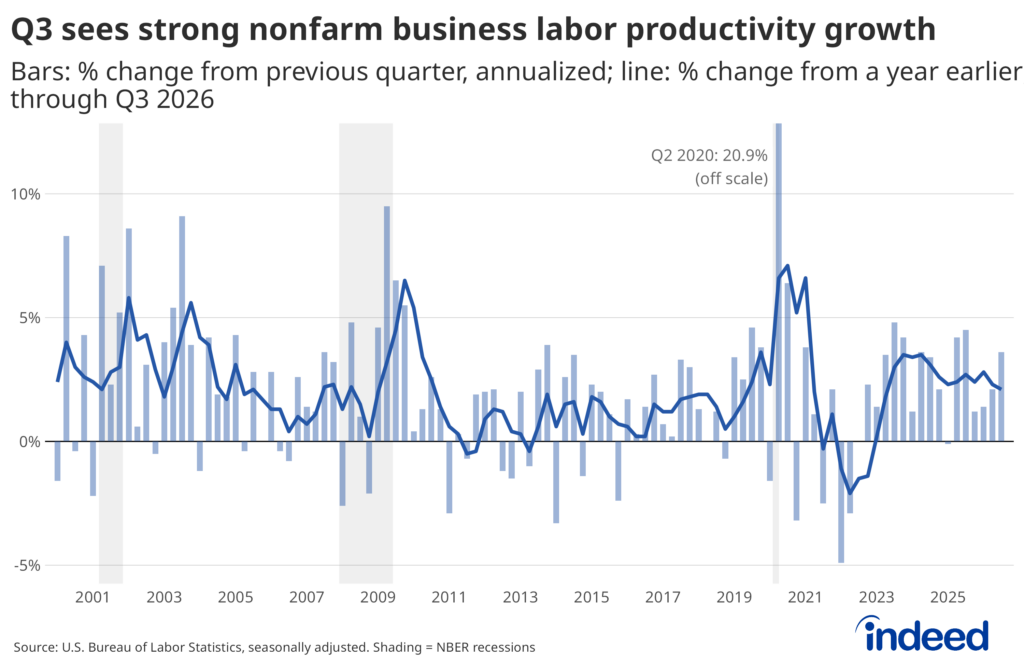
Stronger productivity has given employers room to grow, getting more out of their existing workforces without necessarily having to hire more or increase hours. Since the end of 2022, nonfarm business output has grown about 12%, while hours worked have grown less than 1% and employment in the sector has grown just 1.7%.
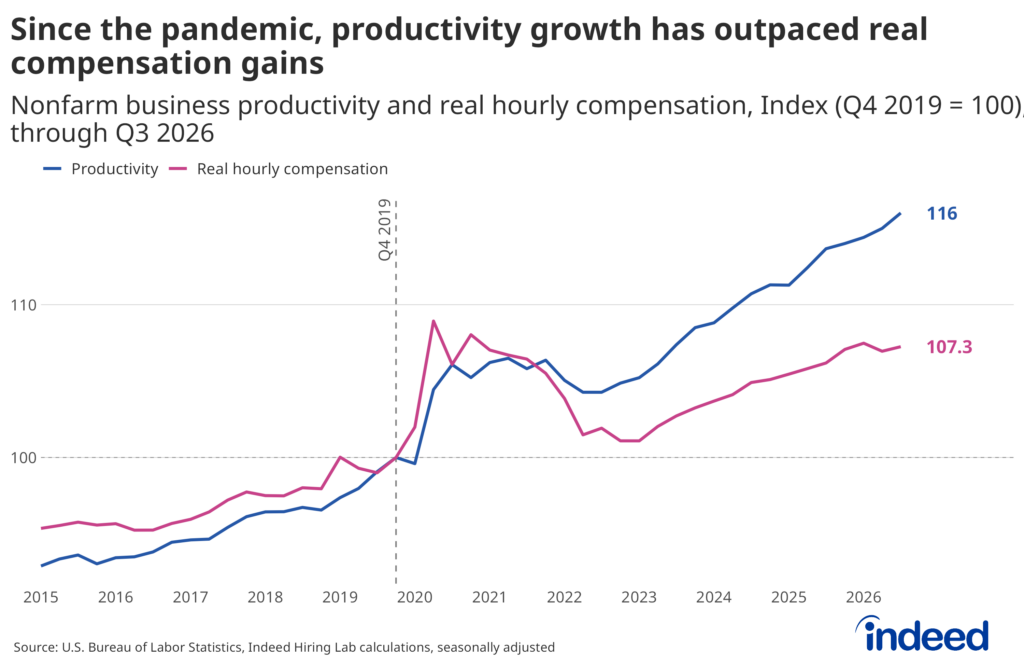
On the worker side, increased labor productivity has not yet translated into higher real pay. Employers are spending more on compensation, but the value of what workers produce is growing faster still. Workers’ share of output has continued to decline, according to the BLS’ methodology, falling to 53% in the third quarter, its lowest since the series began in 1947. For jobseekers, continued low hiring means the benefits of a more productive economy have yet to reach them at all.
While investment in AI and its growing use appear to be contributing to the official productivity data (largely by giving workers more and better tools) an AI-driven sea change in efficiency gains has not yet shown up clearly in the data. But, AI is not the only factor that could drive productivity higher. An improvement in labor dynamism, with more churn between workers who feel confident enough to quit their current positions and start at new employers, would also help to boost productivity going forward.