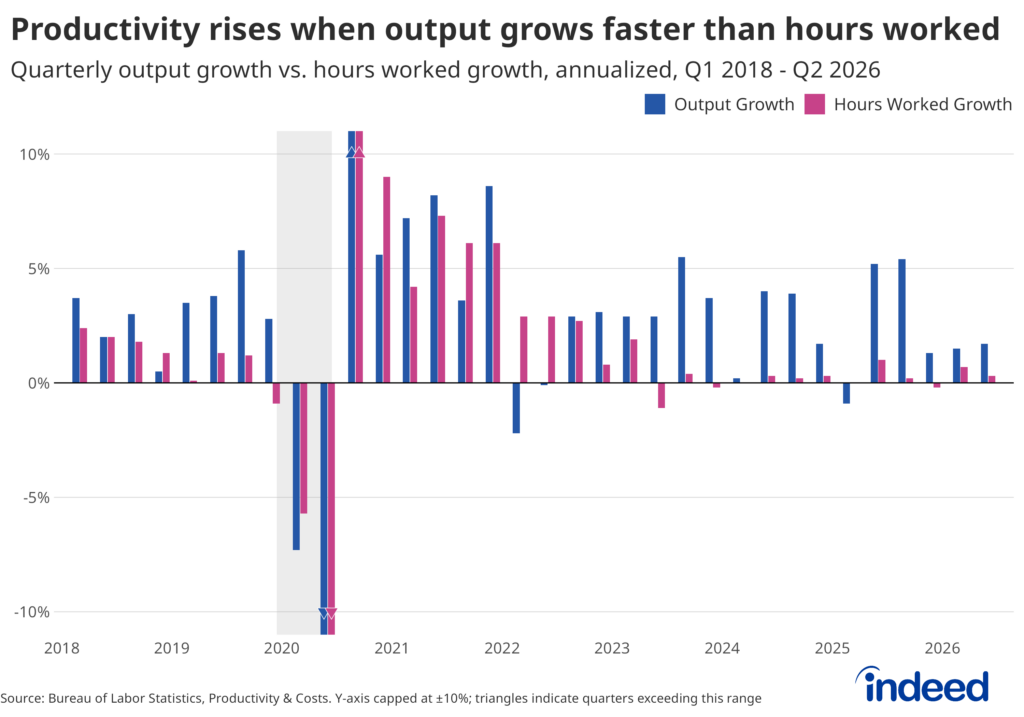
What surprised us: It’s not exactly a surprise that productivity growth remains strong without workers putting in meaningfully more hours — what is surprising is how consistent this dynamic has been over the past two years. Nonfarm business sector labor productivity rose 1.4% in Q2 2026, output increased 1.7%, and hours worked moved a mere 0.3%, according to preliminary estimates from the Bureau of Labor Statistics. The growth gap between output and hours has defined the past few quarters: businesses are getting more out of roughly the same amount of labor, rather than pushing existing staff harder in a way that shows up as more hours. The sustained trend indicates an emerging structural shift, either through efficiency gains, better allocation of existing workers, and/or early productivity effects from AI adoption.
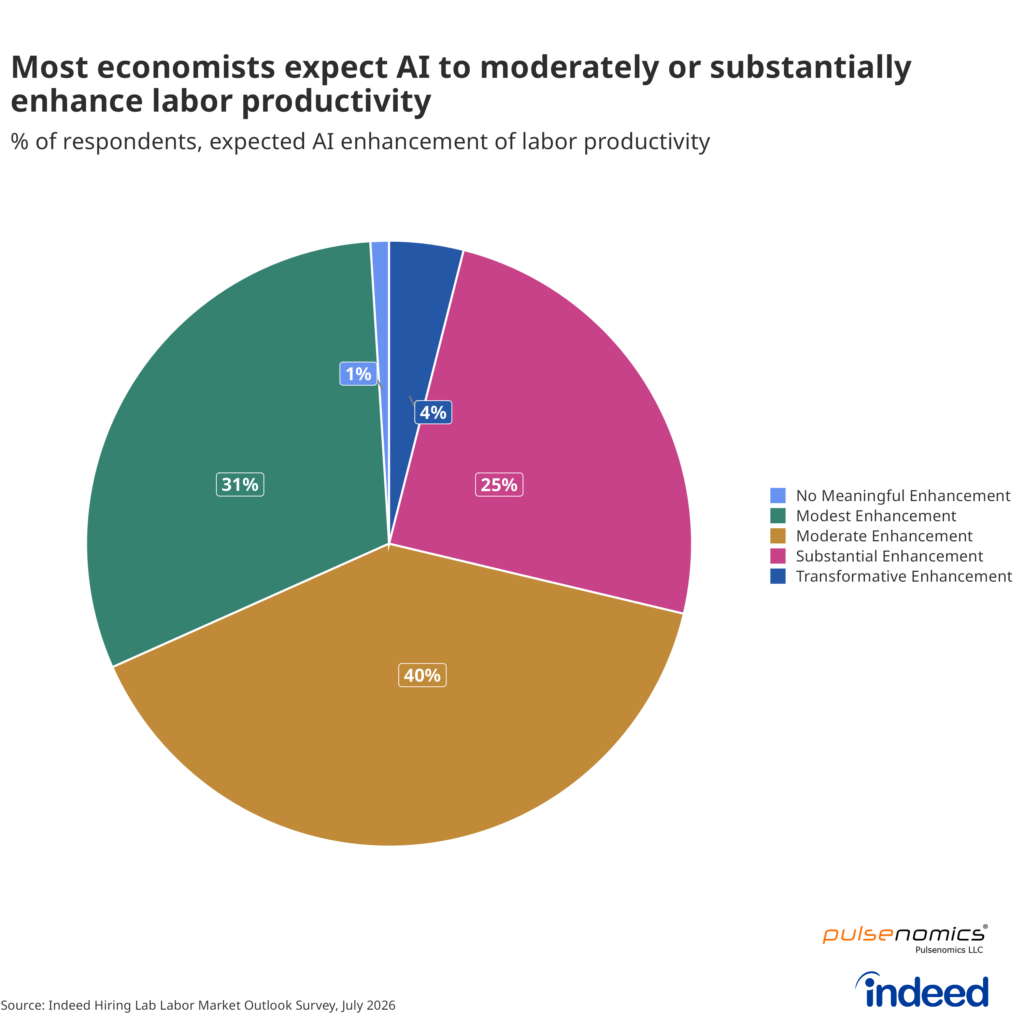
What Indeed data shows: Nearly all economists recently surveyed as part of the Indeed Hiring Lab Labor Market Outlook Survey said they expect AI to raise productivity over the next three years. But the expectations are notably restrained: 70% said they expect only a modest-to-moderate boost, and just 4% expect a transformative one. It remains to be seen how these expected AI-driven productivity gains will show up in output and hours growth going forward. Still, the continued pattern in Q2 of productivity growth through rising output and flatter hours may be an early sign of this enhancement.
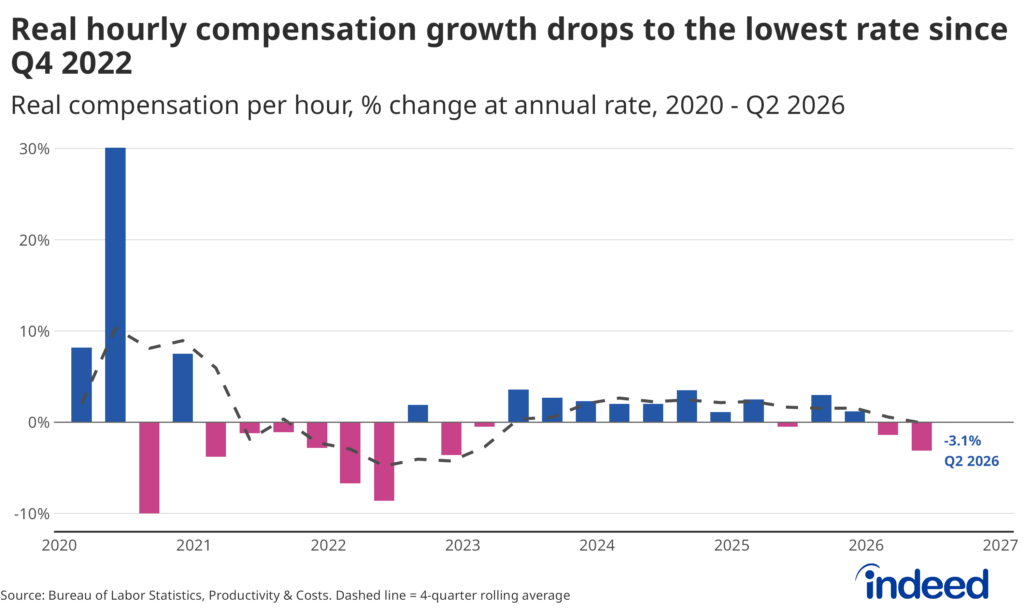
What to watch going forward: Real hourly compensation fell by 3.1% in Q2, the lowest rate since Q4 2022, extending the pattern from Q1 even as productivity itself grew. In other words, workers have been producing more without a proportional gain in real pay for all of 2026, and Q2’s numbers suggest that gap isn’t closing. Workers’ share of the pie — the portion of output they get as wages and benefits, versus the share businesses take as profit — fell to just 52.9% in Q2, the lowest level since 1947.
That combination — strong productivity growth, modest growth in hours worked, and declining real pay — aligns with last week’s Employment Cost Index data, which showed real wage growth turning negative in Q2 for the first time since 2022.